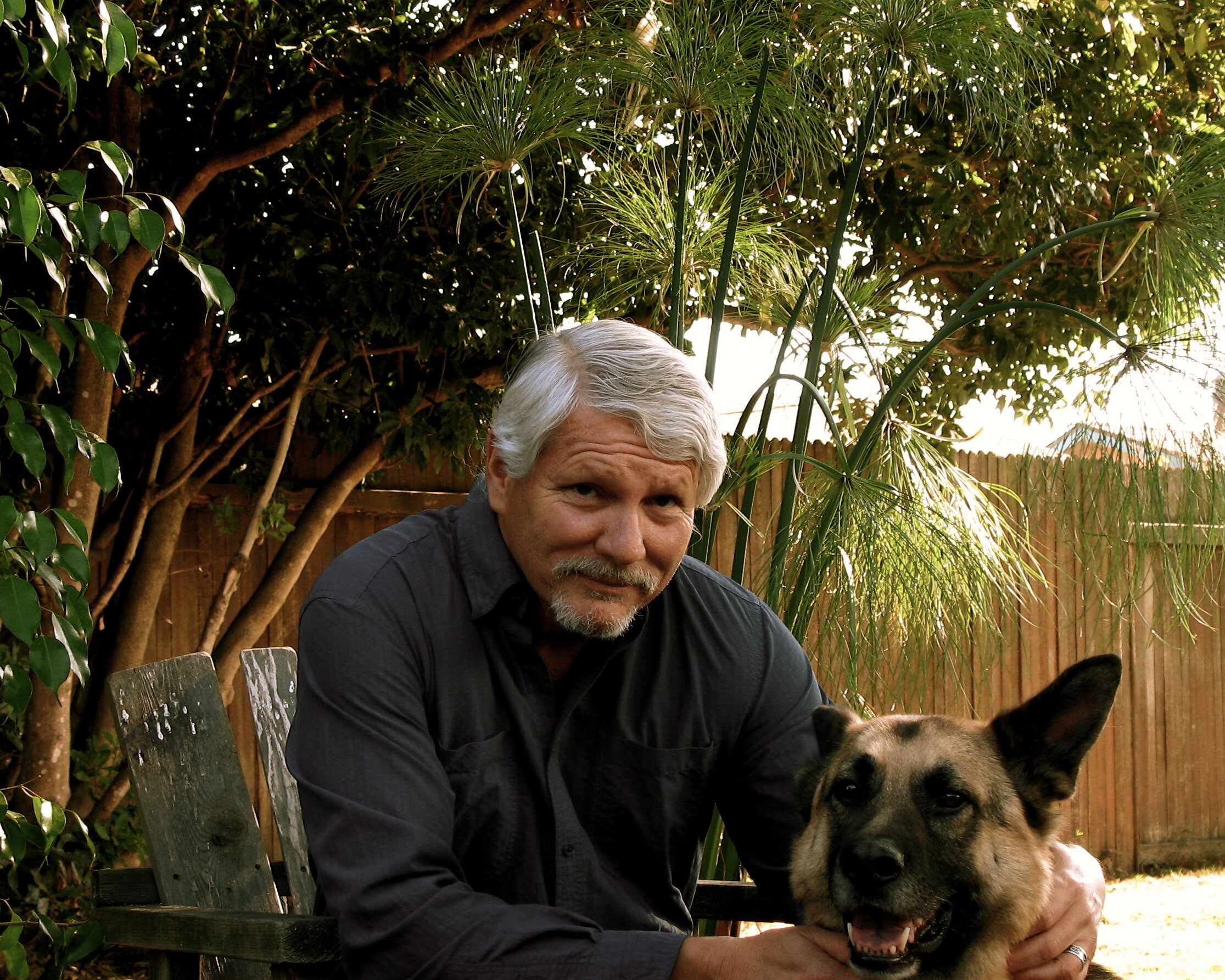
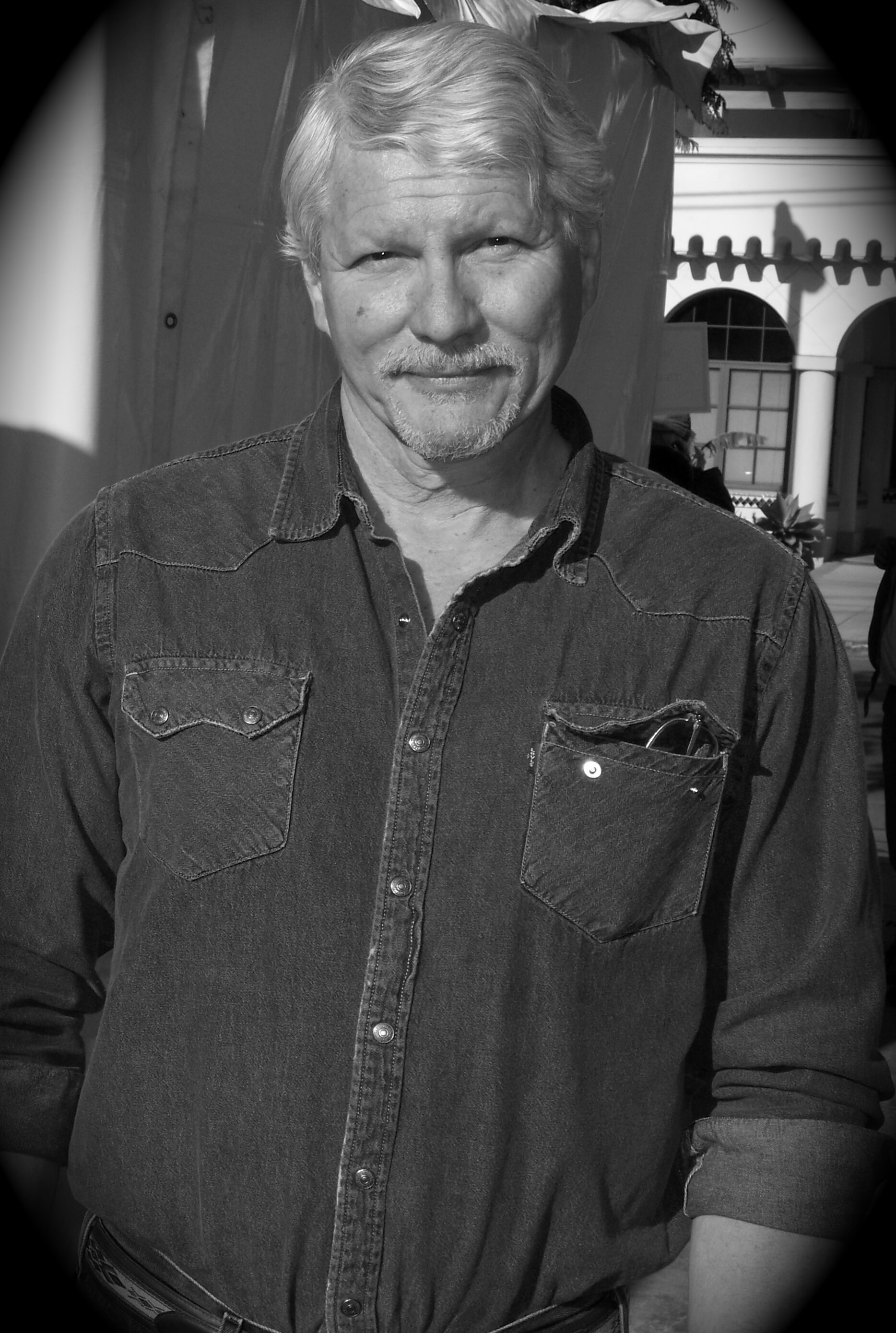
Ken Williams writer: novels, books, screenplays, feature articles
conthien69@yahoo.com
“Ken Williams writes from the heart. He understands, with great clarity, that there is no more powerful form of commentary than to tell moving stories of human frailty and hope. Whether he writes from a wartime battle zone or chronicles the passing of forgotten brothers and sisters on the streets of the city, we are there with him, inspired by his compassion, his sense of justice and dignity, and his appeal to our collective humanity.” Steve Lopez, author of: The Soloist, columnist, L.A. Times.
A Review Of My New Novel: Fractured Angel
"This brilliant and profoundly human novel by Ken Williams will take you into the heart of American society, into unknown territories - witnessed everyday but usually avoided. It has the qualities of a thriller and also of an in-depth, day-to-day study that draws upon the author's long experience in these dark matters. Santa Barbara - known for its beauties and its wealth - is the scenery for excruciating pain and solitude. The dramatic setting, however, leads us into a realm of human warmth and respect. This is an intoxicating novel written by a rebel who has every right to be so."
Beatrice Appay,
CNRS (Centre National de la Recherche Scientifique), Paris, France Past Visiting Professor, University of California, Los Angeles and University of California, Santa Barbara
ABOUT ME
I worked for over thirty years for the homeless of Santa Barbara. I have a wealth of experience working with the mentally ill, alcoholics/drug addicts, war veterans, the infirmed, neglected, survivors of sexual violence and, also the prejudices and fears of some and the incredible hearts of others who reached out to help the new lepers of our time. I use these experiences as sources and inspirations for my novels, screenplays and articles. I served in combat with the 9th Marines---The Walking Dead in Vietnam.
Writing Credentials: I’m am a columnist with noozhawk.com. All local news outlets including the Santa Barbara Independent and the News-Press have published my work. I have two published novels: China White and Shattered Dreams, A Story of the Streets. My nonfiction book: There Must Be Honor is a collection of my articles interwoven with my autobiography. I am looking for an agent or publisher for my most recent novel: Fractured Angel.
Films: "Shelter," a documentary of my work produced by Paul Walker---actor: Fast and the Furious, Flags of Our Fathers and Brandon Birtell; also "Streets of Paradise."
contact: conthien69@yahoo.com
webpage: kenwilliams-writer.com
ARTICLES BELOW:
__________________________________________________________________________________
ALONE, MENTALLY ILL, HOMELESS
Her murky brown eyes were turned inwards, searching. Periodically, they cleared, only to become fogged over again as if shifting cataracts allowed her to play hide and seek with the bustling crowd at the Farmer's Market.
Her long brown hair hung in a tangled web down her back. It had been some time since a comb brushed through it. I watched as again, her eyes briefly flared to life sweeping those around her with intensity, only to slowly dim again. Was it the absence of a threat that she failed to see, or the lack of human connectedness that allowed it to do so? Despair carved a soft sadness into her face as if asking: Where had her life gone so terribly wrong? When and how did she become invisible to those around her? How bad of a person must she be to be punished and banished so?
No one paid attention to this young woman who sat on the curb, imprisoned alone in a “glass bell jar” amongst the bustle of the market. People like her, shabbily dressed, gaunt from hunger and with stress lines dug deeply into bronzed skin were simply too common to notice anymore. Perhaps it is simpler to ignore them than to ask unanswerable questions about decade’s long, economic war against the poor and homeless. It is also a societal one against those who suffer mental illness.
In small and large cities across the land these internal refugees can be found securing their meals out of trashcans. Those heading home to the security of their houses, condos and apartments as night approaches, witness the mentally ill homeless nervously scurrying about, trying to find a safe place to lay down for the night. They also seek seclusion from the prying eyes of others. But this isolation comes with a price for they put themselves at risk of becoming victims to the creatures of the night who prey on them and their vulnerabilities. In addition, homeless women, many who suffer from the ravages of mental illness, must also fend off the rapists and brutal men with hardened fists who hunt them like ravenous predators. Some are also mothers who must either take their children into overcrowded shelters---some of which offer their own layers of hell or risk the dangers of the streets.
“Go elsewhere,” some, plead. But where is that? Tell me which community hangs a welcome sign for the mentally ill homeless? Or the laid off worker, the displaced homemaker, or the damaged war veteran? The superfluous elderly or the throwaway physically disabled? Instead of addressing the root causes of poverty and the devastating cutbacks to the safety net that at one time helped those without, including the mentally ill, communities try ever more creative and punitive methods to punish and drown them in a sea of infractions and misdemeanors, to make life so unpleasant, so down right miserable, that they will simply pack up and move on to another community. Anywhere but here is the operating paradigm.
In older times, the term, “Ship of Fools,” came into being. This referred to the practice in Europe of rounding up the mentally ill, putting them aboard ships and sending them to the next harbor; again, anywhere but here. In the seventies and eighties, we updated this calling it “Greyhound Therapy;” the dumping of the mentally ill to the next county via, you guessed it, a Greyhound bus.
As I watched the young girl, I saw how the stresses of being a mentally ill homeless person had aged her, until it was impossible to see the mid-twenties of her age. But when I approached and spoke to her, a sudden transformation brought forth a priceless smile that gave her back some of her stolen youth. I tried imagining what it must feel like if she had been my daughter? How the heartache of a loving parent caught up in this particular Dante's Hell must be unbearable. Would they even know if she were alive? Would they get cryptic phone messages in the middle of the night? Or perhaps postcards from parts unknown that added another bleeding wound to their heart? Would cold calls from police and shelters map a life gone tragically wrong? And would her parents be desperately dependent upon the generosity of the hearts of total strangers to offer their daughter a warm meal, or something as simple as a safe bed; or as precious as a smile and a kind word?
This young woman disappeared a few days after my encounter with her, yet I cannot forget her. She joined the diaspora of the discarded and the throwaways of our modern times. Unlike the plastic that we collect and recycle, homeless in general and the mentally ill in particular are allowed to perish on our streets---unwanted, uncared for and unloved---except by their grieving mothers and fathers---sons and daughters---brothers and sisters, and strangers moved by the blight of those damaged in hearts and minds.
The young woman’s soulful eyes, the despair and pain captured within, float before me, when quietness ushers in contemplation and memories, of questions of the nature of spiritual values and what it means to exist in what is often an inhumane world.
THE BOSTON TRAGEDY
Again we hear the screams of the innocent. Still again sick men---always men, speak to the world with bombs and the blood of children. They will rant and rave about “causes” that drove them to murder the innocent, but their rhetoric is merely that: rhetoric that hides sick minds, callous and deformed souls. When you strike at children, I no longer care what your so-called ideology is or to whatever god you pretend to serve, for I cannot hear your pleas above the cries of the innocent. And I really do not want to hear that the “ends justify the means.” I would simply point out that the means are the ends---blood begets blood and nothing else. You worship a world full of blood. Of a make believe warrior ethos when in reality you are simply twisted with hatred and made small by your cowardly deeds. You may see yourself as a warrior engaged against the evil west or the foreign occupiers in Washington who scheme to take away your rights as wild men of American mythology, but you are simply a creature of the night defined by your murderous deeds.
I will not dignify your actions by ennobling them in using the language of war. This is not war---this is simply murder of the innocent by a coward. You already see yourself as a martyr---I see you as a murderer of children; the innocent in Boston, Baghdad, Oklahoma City, in Somalia. You see yourself as a warrior simply because you have become seduced by the language and propaganda of violence and hatred: A belief system that feeds off of violence in word and deed. To me you are pathetic and a coward who hides behind macho imagines and gutless and spineless deeds. You shrivel in your hiding hole like the rat that you are, hoping others will engage you as a warrior or patriot. We should see you as the coward that you are, afraid to engage others in peaceful debate because they will see the impotent weakling that you are.
There is nothing heroic in the slaughter of the innocent, regardless of how it is delivered. From out of the sky or hidden in a trashcan, when the innocent are used as dead messengers to terrorize, the message becomes lost. Violence is a straightjacket that imposes a belief system by killing the innocent.
Nor will I lend credence to your unholy worship of violence by juxtaposing your deeds with self-serving violence of my own. I will not threaten your children, or the innocent of your lands like you have done mine. Be your belief be jihad, or some crazy militia seeking to honor Ruby Ridge, Waco, Hitler or the Oklahoma City bombings, I see the blood of the innocent and hear their pathetic cries that turn to whimpers, and then the silence of the dead. I find solace and comfort in the teaching of the true revolutionaries---mostly those of faith that preach to us of a world of brotherhood and sisterhood, of peaceful relationships and respect for one another. Of a god that cherishes us all, regardless of color of skin, nationality or professed religious differences and has little patience for those who preach hatred.
I look to Dr. Martin Luther King Jr., and the other brave men and women who lead a peaceful struggle to overthrow institutional racism in my own country as examples of how to change what needs to be changed, without the killing of children and the innocent. I also hope to learn and be inspired by Gandhi and the brave men and women of Eastern Europe who led peaceful revolutions that overthrew the tyrannical Soviet Empire.
I would say to those cowards who slaughter the innocent in a pathetic attempt to man up to your sorry self-image that if you have a grievance, a cause, an injustice, use the tactics of peaceful resistance so I can hear your argument. I cannot, and I refuse to listen when you speak with a bomb and ask me to ignore the smell of blood.
I would say to my fellow countrymen not to speak the language of terror in return. Already the talking haters have come forth demanding that, in order to combat their terror, we become terrorists ourselves. Erik Rush, a frequent Fox News contributor, was quoted as saying: “Lets kill them all.” Here he was assuming that the terror was the result of Islamic extremists, ignoring the unfortunate yet all to real domestic terrorists that have waged terror against our own. But even taking for a moment that it was a sick individual seduced by jihadist hate filled rhetoric, think for a moment what he asks: The wholesale slaughter of men, women and children---genocide that would do Hitler proud. He wants to avenge the horrendous death of an eight-year old boy by killing their eight-year old boys? He wants to give cover for their murderous and cowardly hatred by inflicting others with our own murderous and cowardly hatred?
There is an old saying: When digging the grave for vengeance, you need two: One for them, and one for you. My heart aches for the victims in Boston as it does when I hear of terror bombings in Baghdad, Afghanistan, and elsewhere. I despair today of what kind of a world we have become. Yet I caution myself that is ultimately what terror wants: to despair, to see a world inflamed in order for me to betray my belief system and transform it into theirs: A world run by violence by little men with big hatreds. I would rather die than see this come to be.
A DEAFENING SILENCE
Sometimes the absence of a sound speaks volumes. When Pushcart Greg used to walk down Haley on his way over to the recycling center, his rickety shopping cart would announce his presence. That cart not only held his recycling haul for the day but all his worldly possessions. Talking to him I would look down into it and realize EVERYTHING---EVERYTHING he owned in life was in it.
Pushcart Greg had been in poor health. Alcohol, malnutrition and despair robbed his lanky frame of weight, something he could ill afford. He was forever bent over using the cart as a “poor man’s” walker. When the streets became quiet with the absence of his clanging cart, I asked around. He had become deathly ill; I was told and taken to the hospital, then to a nursing home where he died.
It’s been a bad summer on the streets. Since June sixteen homeless men and women have died. No headlines screamed their deaths, instead it was one body at a time; one lost soul at a time.
Four lives were claimed on the freeway between June and the end of August. Three men and a woman, all in their mid-forties to early fifties. The last one was a gentle giant with a hellacious drinking problem.
Charlie was well known and well liked, everyone’s favorite street drunk, much like the lovable family uncle, warts and all. Someone told me that he could sing like no other. He would entertain some with his singing and honor others with his honesty. Now he’s gone to be missed by cops and the homeless equally.
The police were deeply concerned. They tried outreaching to the shelters, to the providers, and to the homies to warn and to understand themselves what was going on. They thought there were enough shelter beds for everyone who wanted one. They learned differently. They tried to understand the despair of the streets. They shook their heads in wonder when we tried to explain. In sadness, they returned to their jobs a little wiser, a little more jaded.
The man I had been brought into the Intensive Care Unit in an attempt to identify was just the opposite of Charlie. It would take days to find out just who he was. God knows I couldn’t identify the man but maybe that had more to do with the tubes running in and out of his body, not to mention his swollen face and head. Death’s not pretty when it’s the result of human flesh verses a couple of tons of car metal. When would family and friends finally miss him? How long does it take for the silence to scream its warning, its finite message?
For a change of pace, death came by train crushing the life from Mason. Rushing to the scene, the cops heard classical music from his radio serenading the stilled air that he had been listening to when his life was stolen from him.
Gentle Ed died at Sarah House, finally finding peace at the end of his life; a peace that had eluded him for years on the streets. At Sarah House, he found himself surrounded by kind people who served him without judgment of any kind. They simply wanted to make his transition as peaceful and meaningful as possible. They gave him the love, not to mention the shelter that so desperately eluded him on the streets.
Vickie came home to Casa Esperanza when Death let her know that he was looking for her. When I saw her sitting in the wheelchair, bent over from pain that radiated throughout her absurdly thin body, part of me wanted to chastise her for leaving the nursing home down south. But how could I? She simply wanted to be with those who loved her when he finally caught up with her. Isn’t that what we all want in the end? Family. Friends. Love had been in short supply for the last several years for Vickie, but she had found it in the staff, providers and other homeless who call Esperanza home.
Suicide is a complex affair. It’s a cry for help, an end to a journey, and sometimes a hostile act against others. Who was “Krista” so mad at and for what reasons that she would want to hurt them so badly, would want to burden them with so much pain and so much guilt? How much inner pain, how much inner guilt did she have to want to exit life like that---punishing herself so badly with that kind of physical pain on the way out?
Krista for the most part hid her pain well. But calling forth the memory of her sad-sweet face, a certain sorrow can be found in her blue eyes just beyond reach. She had fallen so far in life that she saw no way to make the journey back.
Then there was the peaceful death under the freeway. The homie had crawled into his sleeping bag the night before and had fallen asleep never to awake. That’s the way he left this earth: listening to the citizens of our community as they rush to their busy lives not knowing the dying man they were literally driving over.
Will this carnage slow down? Or are the homeless to continue to die at an ever-faster rate, finally succumbing to lack of food, lack of shelter, lack of medical and psychological help. Exactly the same causes that the poor in New Orleans died from.
Will the homeless continue to face their fate alone, weakened in body and spirit, waiting for the traditional dying season of winter when coldness and wetness, hunger, pain and aloneness make death a reasonable option? And what of us? Will we retreat to our houses to play with our new plasma and LCD televisions or will we finally demand that the politicos finally do something about this---THIS time? Will we demand that our moral principals that our churches and temples teach us really mean something besides an hourly sermon? Can we as a community, stand for something---stand with our poverty-stricken neighbors, not only in Santa Barbara but also in Louisiana, in their hour of need?
Published Oct. 2, 2005 Santa Barbara News-Press
CONTAGIOUS SUICIDE
“Some of us are envious of ‘Krista’.”
If I had given it a moments thought, I would have known what the bowed woman who stood before me was talking about. But this was my first day back at the homeless shelter from a camping trip to Big Sur. It’s hard to think that only days before my greatest worry was having enough wood for the nightly fire. Now I had to decipher the convoluted message hidden within the enigma of pain.
“What do you mean?” As soon as I asked I knew the answer. I tried to brace myself for the harsh reply and relax my stomach that was suddenly twisted into a painful knot.
“Her pain is over with,” the woman quietly replied, her voice breaking.
This was a blow on top of the jackhammer strike of being told that Krista had hung herself when I first walked into the homeless shelter a few minutes earlier.
“You know my rule?” I reminded the woman before me. She was bent over as if too much history, too much weight lodged within her heart.
“I know, I’m not allowed to hurt myself,” she managed to say through chocking tears that washed across her face. “But you don’t know---I’m not used to this,” she said looking about her like she was in a house of fear at some county fair. “I’m not used to this. I used to have a home, money, a life---this,” she stated waving a hand in front of her like she was trying to dispel fog that threatened to engulf her. Her shoulders slid down buckling under the strain.
I tried pushing my own shock and pain aside. Looking around I could feel the heavy tension weighing the air. I could see hurting, calculating minds making bad emotionally laden equations. Suicide is contagious in such a volatile, emotionally liable, and hurting population with little to loose except unending and ongoing despair. Without even trying I could see half-a-dozen people sitting in chairs or sleeping on couches in the shelter with recent history of suicide attempts.
My mind drifted back to Krista. A slim and attractive woman with large eyes who walked with grace yet sadness cast a black veil about her. I remember the last conversation we had, the last bit of advice I gave her. I raked my mind: Had I missed something? Had there been something in her words, in her eyes foretelling the suicide?
A homeless shelter is hell on earth, Dante’s Inferno brought to life. A place where those damaged beyond repair find themselves coexisting with those who in their worst nightmares could never imagine such places existed.
Throughout the day, bits and pieces of information came forth and ironically the woman behind the tragedy came to life. She had been a model for one of the top agencies in the world. A long marriage to a producer, a life abroad, houses, travel where all hers. Then the descent started. Only in retrospect could one see that the road was paved with hell’s building bricks. A divorce, a wrong decision here, a bad turn of events there and suddenly she was sharing her life with a hundred strangers, most struggling with their own pain, their own despair.
What was the final straw? What pain could possibly cause someone to kill himself or herself as brutal and painful as hanging? What signs did I miss; did we all miss?
It turned out that Krista had asked for help the week that I was away. But the system was on overload. Lifeboat ethics was in full swing. If it didn’t bleed then it wasn’t administered to. What is sadness when the mentally ill, and those wounded by life’s experiences, live their daily existence punished for their frailty?
I hold Krista’s picture. Her large eyes, bordered by sweeping blond hair and a narrow face stares back at me. They plead for a reason to believe that all this craziness of a homeless shelter is just a bad dream. That she’ll wake up to her own bed in her own home. That someone to share her joys and even more important her pains will be there to comfort her. That a harried social worker will recognize the pain and offer absolution. That life won’t end this way. But it did and now my job is to corral the Genie now that it’s out of the bottle. To somehow dampen the siren song of non-existence that calls out its cruel master plan to the bleeding souls in a homeless shelter.
“David” comes up to me. “Is there hope?” His eyes water desperate to believe.
“Yes,” I try to tell him with conviction.
“I will move forward? I will leave this place behind?”
“There’s hope,” I state firmer as much for my sake as his. Days later David would end up trying to take his own life.
The only thing I know is this: That without hope, life is impossible for us all, and Krista’s solution takes on a terrifying resonance.
Hope; the one thing that finally left Krista, leaving her all alone, vulnerable, and the rest of us, a little less. The one thing that David was unable to find in the emotional vortex of the streets.
Published previously by the Santa Barbara News-Press
“Art”
Coming back from vacation and rereading my journals I ran across this article that I had written two years back of a sad death of an old man:
“Art? What’s wrong?” I asked hoping against hope to keep my voice from cracking.
“I don’t feel so well. I hurt,” the old man replied through crippled lips. I leaned closer to better understand. He had lost his false teeth somewhere along the line and his speech was slurred as a result. With mounting alarm I noticed that his cheeks were hollow, like life was being sucked out of him.
Art was in his bunk at the homeless shelter. I had gone upstairs with a nurse to check up on him. He needed to be in a hospital, a nursing home or a hospice, not here, nor sleeping on the streets where we found him.
The night before he had returned to us from the hospital. Working that evening---watching him wheel himself into the shelter in his wheelchair---my heart broke. He looked worse than before his hospitalization. His skin color was all off---a deadly ashen gray, a hue that I had come to know well over the last two years as the homeless died at an ever accelerating rate. It is the color of death---of skin deprived of oxygenated blood---of hope slowly crushed by poor nutrition, cold and indifference. We had sent Art to the hospital five days earlier in a walker and by ambulance. He came back to us in a wheelchair delivered by taxi.
Upon his entrance to the shelter, I sat down with him and went through his few belongings. He had seven bottles of meds but no overall instructions of when or how to take them, least none that I could find.
In mounting frustration, a sigh escaped my own lips. I thought back to just last week. I found him on his hands and knees in the upstairs dorm. When I asked what he was doing, he replied, “Going to the bathroom.” He was dragging his faltering body along on all fours, hands and knees, while trying to hold his belt less pants up---his dignity dying along the way.
Rushing over, I helped him stand. Without his missing false teeth, his tongue protruded out between swollen lips. I remember thinking it was the same way Michael Jordan used to play basketball. But this was no multi-millionaire athlete. This was an old man dying in pain, alone and in despair in a homeless shelter.
“Dumping” of the poor by jails, hospitals and others, to homeless shelters and the streets is, all of a sudden, news worthy. But it has been a fact of life for most of my professional career. The so-called safety net was reduced years ago to a funnel that poured the neglected and poor into almshouses: homeless shelters. In these places, partially by design but mostly because good people answer the call of hurting times, a desperate attempt is made to connect to and help the new lepers of our age, to those who are shunned by some and despised by others.
This connection of soul to soul is often by the homeless themselves: Men and women who find the time---the need to reach out to offer help and hope to those without. Often it is the low wage earning staff who goes beyond their job description to look out for those too sick to take care of themselves. And sometimes it is the outreach workers who have the privilege to care for their clients.
But sometimes, all to often it is not a feeling of privilege but pain that paints my world black. Two weeks ago, that morning I helped Art back into his bed, with his moans slicing through the air lacerating my heart; he pulled the blanket up tightly to his chin with only his head sticking out. His sight darted about in panic. His tongue was still sticking out. He reminded me of a child who thinks they can keep the night monsters at bay with a thin blanket. But Art’s monsters came with the morning sunlight exposing harsh realities.
Art looked away. I could feel his embarrassment---the crushing knowledge that he was dying, dying in front of all of us---death coming before an audience of strangers.
“Art, everything is going to be all right. The ambulance will soon be here. They’ll be taking you to the hospital.”
“They don’t want me.”
Of course what he meant was: Nobody wants me. Nobody wants a poor, old, dying man.
Art went back to the hospital that morning. He was sent back to us---and again readmitted back to the hospital. After engaging the heart and professionalism of a certain doctor, (thanks Dr. Bordofsky) and Sarah House, a sick old man was welcomed into a hospice where he died surrounded by love within days from his last stay at a homeless shelter.
This death cut deep. The images from his last two weeks on earth will stay with me for a long time. Who knows maybe it is myself, years down the road that I see, crawling in pain just to get to a bathroom, one shared by two hundred others. It’s not a pretty way to go. Art will be missed, the manner of his death branding many of us to the core: mocking all of us---contemptuous of our spiritual beliefs, and, trashing our self-respect---where did it all go so wrong?
Two years ago: so much has changed---so little has...
posted previously on noozhawk.com
ALONE SHE SAT
She used to sit at the Farmer’s Market---quietly alone, her sight cast down, lost to her inner world. Her face was drawn long with overwhelming sadness. Her blond hair hung long in dreadlocks. She would sit like this for hours locked within the confines of her prison. For her it was a sadness so pervasive as to cut her off from her fellow human beings, from anything that approached happiness.
Sometimes when we talked, I would be rewarded with her smile. Not only did the beauty of an inner glow that came miraculous to life suddenly transform her face but also its radiance would enlighten the immediate area around her. In wonder, I saw that all near her shared in her overwhelming sense of joy. I remember thinking what an incredible gift to possess: an awe inspiring spiritual blessing. I couldn’t help
but juxtapose this simple woman with others who bring so much pain and violence to the world. Then there were the other times when she was hunkered too deep into the pain of sadness to acknowledge me; an isolation so profound that it was like a brick wall encircled her.
The last time I saw her I had bought her a rose. Her smile was even more shimmering in its brilliance than usual as she received it. She thanked me in a soft voice. I was not to see her again after that. Did she run because the simple act of buying her that flower threatening? Did the voices warn her that kindness was a danger to self? Of course the alternatives, jail; the hospital; a dead body by the tracks or under some bush, is too painful for me to contemplate.
For years, “Doug” would push his shopping cart down our streets. With his busted foot that refused to heal, that cart was more like his walker than the vehicle that contained his worldly belongings. We often talked about the curse of alcohol that had such a hold on him. At times, he would struggle mightily against the curse, but then alcohol freed the voices---and the sadness returned. Here was a choice to end all choices: the damnation of alcoholism and all that came with it such as aloneness and homelessness, or sobriety and the door that that opened, the terror voices and crushing sadness.
Somehow Doug fought through both and ended up clean and sober, on psych meds and housed. The voices were contained, the sadness controlled but not eliminated. He was a brave and courageous man fighting overwhelming odds to a draw. I often wonder: Would I have the same strength and courage?
Dr. J and I would frequently go looking for “Ben.” One would think an old man overcome with the disease of alcoholism and barely able to walk even with the aid of his walker wouldn’t be much of a challenge to find, but he was. When he wasn’t at his favorite trashcan or bench, we would eventually run him down in jail or in the hospital. It was hard to share this man’s rapidly downhill spiral to death but that is the journey we have chosen to travel with Ben. When offers of help are repeatedly turned down then the only alternative for us was to be there as part of that journey. We tried to lessen the suffering and the loneliness; to share with him the indignity of the streets and to help with his medical needs; and to provide this old man with warm clothes in the winter and companionship year round.
He would share with us the story of his children, and bits and pieces of his life. We found victory when he smiled, a sweet innocent smile of an old man passing to the other side. Someday, somewhere, his children will mourn when he dies but hopefully they will know that their father had company and friendship on his final road trip; that people tried to lessen his burden and pain, and that Santa Barbara was kind to this old man and he got a measure of respect and honor that we all deserve as we prepare to embark on our final journey.
These streets, our streets are home to so many sick and wounded, many suffering the hell of mental
illness. Sometimes good citizens unintentionally feed into hateful stereotypes that have devastating
consequences. Recently the streets have witnessed numerous beatings of the homeless---in Santa Cruz they call it Troll Bashing. I think of “Carl”, a fellow Vietnam combat Marine who woke to find someone smashing his wheelchair down on him while yelling, “Bum!” I think of the woman treated recently by Cottage Hospital the victim of a severe beating. I shut my eyes and a horror show of bloody faces and survivors of rape roll before me.
And with the proposed Mental Health cuts, even more mentally ill people will find these harsh streets home. For those of us in the service community, and for those kind citizens who find homelessness a national disgrace, we need to remember and honor those of our neighbors who through life’s circumstances find themselves homeless. Someday, all this will be behind us. Someday, we will look back and see what we did and didn’t do during these trying times. Till then, our friends on the streets need our help and our friendship however we as fellow citizens are moved to show it.
previously posted on noozhawk.com
WOUNDED WARRIORS
Call of Duty. Assassins Creed. We have turned war into a game. The blood flows easily and in brilliant red---but that blood isn’t real. But there is real blood that is shed. War is not a game. Real people, both the citizens of Afghanistan and our own sons and daughters fight them. War may be other dimensional for those who sit safely in Washington and who never tire of never-ending, low-intensity conflict. But it is very real and personal to the Marines and soldiers and their families who are the boots on the ground as it is to the locals whom the political correct like to refer to as “collateral damage.” A rather quaint and antiseptic saying for charred flesh and shrapnel shredded bodies---that is if enough of what was once a human being can be found.
The brutality that is war is all too real for the soldiers and Marines who must carry out ill-advised and ill-conceived military adventures abroad. They are not computer generated, three-dimensional virtual reality warriors. They are our sons and daughters, our husbands and wives, our aunts and uncles. They are the kids next door who can’t afford the ever-escalating cost of higher education so they enlist to pay for it. They are the boys and girls in school who fail to learn the lessons of Vietnam---perhaps because they aren’t taught. The same way that the lies, untruths and make believe WMDs are conveniently forgotten.
Some volunteer because of the supposed glory of combat. Others enlist to defend against an elusive enemy that shifts almost daily depending if we are nation-building, fighting an insurgency or conducting a proxy war against an enemy based in Pakistan. Or do we fight the Taliban because they are a threat to the corrupt Kabul government and the warlords---some of whom run drugs the same way drugs were run during the Vietnam War? Assuredly we don’t fight the ongoing war in Afghanistan against El Qaeda, which is now based in Pakistan and elsewhere. Or do we simply fight because that is what we do, who we have become?
Let me propose a new national enemy since we seem to demand a new one constantly. The new national enemy is apathy. The apathy we have for ongoing wars. The apathy that we show for the real costs of constant wars that are before us yet we always seem to forget when the few call us into new wars of choice. The apathy we hid behind when the price is too much for some to bear. The apathy we engage in when suicide is epidemic amongst our kin serving in the Armed Forces.
According to the D.O.D. suicides in the Armed Forces surged to a record high of 349 in 2012---more than the 295 service men and women killed in Afghanistan that year. In comparison 301 took their own lives in 2011. After having leveled off in 2010 and 2011 the sudden acceleration in suicides caught the Pentagon by surprise. Surprise? Really? What part of P.T.S.D. is not understood? The first word is post: meaning after-the-fact. Many Vietnam vets still struggle with P.T.S.D. so many years after that disaster. And now Iraq and Afghanistan vets are following in our footsteps. Is there any wonder? The only difference between them and Vietnam vets is that they are not despised as we were and their wars are lost a little at a time rather than all at once with the whole world watching.
While the Army had the highest number of suicides at 182, the Marines saw the greatest percentage jump: 50%! To confront the evil that man is capable of, to witness the carnage and suffer the soul damage that violence inflicts always costs. When the speeches become hollow and the music mute the combat veteran faces alone the horrors of war that are hidden for everyone else but him/her. When quiet solitude comes in the early morning hours for those without combat experiences that is the time when a symphony of sounds: the moaning of the wounded, the quiet of the dead obsesses our existence. The startle reflex to loud noises and sounds that reminds one of bombs becomes deeply ingrained over time. Disfigured flesh, the eyes that see Death stalking them, the cries of grown men calling for their mothers will forever be with the combat vet.
So when the patriot calls for endless war, calls us yet again to invest our country’s children stop and think. The costs are ongoing---maybe not for you. Maybe you can hide behind the apathy and pretend. But the cost will be paid for in flesh and blood and in the damaged minds and wounded souls of those put in harm’s way by apathy.
Update
A just released study by the Department of Defense of suicide rates amongst veterans found that they had undercounted this rate by 22%. Previously they had reported eighteen suicides daily amongst veterans. For the years 1999 through 2010 the actual rate was twenty-two deaths a day---or one veteran who kills himself every sixty-five minutes. Sixty-nine percent of these deaths were amongst veterans fifty years of age or older. Those who die by their own hands are not included on the Vietnam Memorial Wall.
posted: noozhawk.com, 2-13-13
THE SLAUGHTER OF THE INNOCENT
Yet again, we find ourselves dealing with the slaughter of the innocent. Four times in the last few years we turned on our televisions, only to see weeping survivors: husbands, wives, citizens---casualties of mayhem all. But now it is fathers and mothers, and the brothers and sisters of six year olds. Six year olds! We can no longer even protect our kindergartens. How many times must we endure hideous murder of the innocent before we reawaken our sanity? How many of our children must be sacrificed upon the alter of a Rambo nightmare that some wish to play at? This fetish need to playact has become an absurdity. I do not need wannabe warriors to protect me. This delusional dream of protecting my rights from an evil government must end. If your over whelming desire is to play at being a warrior then man up and join the Marines.
I have stood in opposition my entire life against my government. First against the insanity of Vietnam, then against the Central American Wars, and then the wars in Afghanistan and Iraq. I fight equally against the denial of basic human rights by a government that hides torture behind a newspeak language of “enhanced interrogation.” At no time did I contemplate picking up a gun to deny my fellow citizens their basic right to life to effect political change. Yet fellow Americans demand the right to bear arms---which is really the fetish desire to possess weapons of war---weapons of slaughter. These weapons of war can and do maim and kill scores in mere seconds.
“When I was a child I played childish games. When I grew up I set aside those games and assumed adult responsibilities.” As a child, I played at war. I shot my friends a thousand times only to see them miraculously reborn to resume the game. In Vietnam, I learned the dead stay dead. Those who died, died for lies---for “truths” that shifted with the political seasons. The children of Vietnam were brutalized by that war. And now those nightmares that have haunted me from that war have added yet another reality: it is our own children that have become brutalized by the same weapons of war that I carried in a real war.
An M-16 on fully automatic can empty a twenty round clip within seconds. What purpose can such a killing device serve other than to kill---to kill quickly and kill many? And does one really need a magazine of death for target practice? And can you really call hunting a sport with such weapons? Is a deer really that threatening? And if such a weapon is truly needed by wannabe Rambos to fight a mythical dictatorship, then why not allow the ownership of machineguns? Why not rocket launchers? Why not helicopters gunships? Why not the Devil’s breathe: napalm?
When did a nebulous “right” to own a weapon of war deny me my basic right to go to the movie theater with my wife without the risk of death? When did gun rights become paramount over my right to talk to my congressperson on a street corner? When did my right to visit a shopping mall, a lecture hall, simply to walk down the streets in safety become secondary to the right of some to engage in delusional payback to society? When did gun rights overshadow the right of a six year old to go to school?
Year ago, I left a war bitter over the lies and brutality of it. The most disheartening being the price children paid that I sadly saw first hand on a hospital ship. The burnt flesh, the scarred faces of innocent children was the real and immoral cost of war. Now the mourning of grieving mothers and terror stricken fathers---sights and sounds that tear chunks from our hearts have become a reality. War on the home front is made against the fragile and small with weapons of war that are legal to possess. The weapon used to kill mere children is what I carried in a real war against a real and heavily armed adversary. This same weapon---is now used to rip the life away from children.
Our first responsibility as responsible adults is to our children: To feed them, to educate them, to love them. But all of this is impossible unless we secure them the most basic of all rights---their right to live. We have failed and we have failed miserably in this, the most basic of duty of a civilized society. We should all be shamed by this slaughter of the innocent.
post: noozhawk.com, 12-19-12
A Poem for Gloria
Screams, angry red flames, burst alive,
splitting the midnight black void.
Purple tipped inferno,
pushes across withering flesh.
The color of indifference,
the paint by number homeless refugee.
Steel gray fog swallows an investigation,
stillborn, absence the yellow tape.
Despair---white-hot coals while living,
death, consumed a wounded heart.
Alone, abandoned, isolated, fear,
a perfect storm, Gloria the eye.
Hers, the faceless enemy,
hers, the face of the enemy.
The Other personified,
the Other, birthed by fear.
She, indifferent to painful words, coldness of others---really?
she: saddened, abandoned, AWOL love.
Benign neglect, metamorphosis---,
burn of focused hatred.
Class enemy,
classless disposition of fear.
Gone is the suffering,
Gloria is dead.
One year ago Gloria’s burnt body was discovered. She was a homeless woman living outside in a junkyard. One year later questions remain: Why did she not try to run nor crawl for help? Were their other wounds on her body other than those caused by the fire? Were her lungs scorched indicating that she was alive when the fire engulfed her? Were accelerants used? How did the fire start? Why was the scene not cordoned off? Work crews were scrubbing the yard clean within hours of her death. If a woman had died in a house fire in Montecito or Hope Ranch would not the scene be off limits to the public while a police investigation was being conducted?
Ross Stiles was killed a few years back. The police investigation into his death was closed in five weeks, before the Coroner had ruled his death was due to blunt force trauma to the head. His two killers still walk our streets. There was no justice in his case. Will there be justice for Gloria?
published: noozhawk.com. 12-5-12
One Year Later, A Death in Santa Barbara Remains a Mystery
Cold---late November 2011---low thirties. Gloria sleeps in a thread worn sleeping bag in a small junkyard on Santa Barbara’s Eastside. Mini junkyards run up and down the street. Nearly midnight: the witching hour. Suddenly a firestorm engulfs Gloria. Flames shoot upwards into the black ink sky. Fire surrounds her eating her flesh like a starved jackal. Strangely most of the junkyard is not torched. An aluminum tractor-trailer that she sleeps next to begins to melt, mercifully the man sleeping inside escapes with minor wounds. But there is nothing merciful about the conflagration that consumes Gloria. The fire is everywhere on her body, consuming flesh, scorching lungs yet she doesn’t seek help.
Two days pass. I remember it like it was yesterday standing in front of the yard with my blood pressure screaming high. Work crews were scrubbing the place clean. No police tapes block off entrance to a potential crime scene. I complain about this fact to a T.V. reporter. She stops the camera from filming to inform me that she was shooting the scene ten hours after the fire was extinguished. The cleaning crews were already conducting their business. Angrily, I finish the interview and approach the yard. I pass containers half full of fire debris---potential evidence. The gate is open. I asked a man close by to identify where Gloria’s body was found. He looks down at my boots and states, “There.” I closed my eyes and see a woman known to all of us who worked on the streets. She is, was, in her mid-forties, a harried woman in possession of a wounded soul. Like so many homeless women, she was driven to the streets by existential demons. Like so many of Santa Barbara’s homeless, they live in fear of the violence that plagues their existence. Two weeks before her death, another homeless woman was the victim of a vicious beat down and sexual assault. Was that why Gloria was in the junkyard? Was she seeking protection from the predators that roam the streets?
Opening my eyes, I turn. I judge the opening to the yard to be six feet away. But from what I am told, and looking down to where the body was found, she doesn’t even crawl six inches. The street is mere yards away. Again, help is within easy distance but she doesn’t move. She burned to death but tried not for help? How is this possible? My anger boils over.
Over the next few weeks, I do what I can to engage the community to demand that an investigation into her death be conducted. I write articles, speak before concerned groups but nothing is heard. One concerned citizen tells me she approached the police questioning the cleaning up of the yard so quickly. She was told all the debris was swept up and dumped into barrels. This way, when the police have time, they can go through it and look for evidence. Really?
Let’s pretend a woman who is fortunate enough to live in a house, say Montecito, where homes run into the multimillions, home to Oprah Winfrey, dies in a horrible fire; a fire that consumes her residence---fast. Wouldn’t the yellow tape of the police be strung up for a considerable time? Would cleanup crews be allowed in to sweep up potential evidence within twenty-four hours of her death? Would the community not be kept informed as to the progress of the investigation?
I’ve been here before. Ross Stiles, a crippled homeless man died as a result of a cowardly attack by two men a couple of years back. Within five weeks, the police had closed the case. No proof that his death wasn’t the result of natural causes was the reason given, regardless of what Ross said before he died. I wrote and spoke before various groups at the time, and questioned the police investigation, or lack thereof. Only problem was that the case had been closed before the Coroner had completed his investigation. He found Ross’s death was due to blunt force trauma to the head. Ross had told his friends on the street of being hit in the head by a bottle. The case was quietly reopened but too late. Ross’s killers remain at large. Another homeless man, Gregory Ghan, was murdered in June of 2008. There is still no justice, and no peace for his family either.
Concerns were aired against me at the time by the powers that be with my boss because of my writings. Both the Police Department, and my former agency, not so subtly let me know that my articles are read and discussed by higher ups. It’s too bad Gloria’s death doesn’t draw such scrutiny.
I understand that none of this looks good. But try standing at the spot where a human being dies such a horrible death and then try to understand why she doesn’t even crawl inches seeking help? There is no greater motivator than pain, and there is no greater pain than fire. How did the fire start? Why did it spread so fast? I wake up at night trying to understand, also trying hard not to equate Ross’s murder investigation with Gloria’s.
A community group counted eleven hundred homeless in south Santa Barbara County. Considering that one third are women, this means over three hundred homeless women roam our streets. They slink about, unwanted, some unwashed, most hungry, others untreated by a sadly malfunctioning mental health system. All subjected to the same homegrown terrorists who hunt them like prey. Not enough beds. Run the bums out of town.
Walk down State St. and see our homeless neighbors eating throwaway food out of trashcans. Watch women without housing and with guarded stares push shopping carts full of their worldly possessions. Try to imagine them deathly alone sleeping behind buildings, along the beach, in parks, in junkyards, always with one eye open. Try to comprehend burning to death without reaching out for help. Try to see how all this happened almost a year ago and still no update to the community and no arrests.
For our neighbors on the streets and especially the homeless women in our community, there is neither justice nor peace. The death of Gloria and Ross and Gregory were all tragic---ongoing ones that demand justice. Justice is not something to be parceled out to those only with money, or fortunate enough to be housed. It is for every one or no one.
noozhawk.com, 19-6-12
--------------------------------------------------------------------------------------------------------------------------
(This article is dedicated to all who allied themselves, through actions and deeds with the homeless and poor. At a time when society genuflects before ego and wealth and senseless violence rages across the land and world you stand in the tradition of Dr. King and so many others who had a different vision for our country. Thank you.)
I once told a good friend of mine that I live my life by a saying. When I told him what it was he looked at me like I was insane. When I think about it, it is actually four sayings that have deeply influenced my actions over the course of years.
The first one, one that I take deeply into my heart is to never be a “Good German.” This was the excuse that many used in Germany to justify their behavior during the homicidal Inquisition that ruled their lands for so many dark years. Their excuse was that they weren’t Nazis; apparently no one was, but merely good citizens who stood beside state and country in a time of crisis. It was too risky, too frowned upon to fight the evil that was unleashed upon a defenseless and vulnerable population. Choosing to stand with the norms of a society gone mad, they forever linked their beloved country with pure evil. Their lesson is a simple and humane one. Societal and national norms are never above our moral beliefs. When we target the weak and vulnerable, when we make differences in skin color, nationality, mental health status or religion a reason to hate and fear we also open our own hearts to evil. Allowing the outcast to stand alone, we betray whatever progress humankind has made. We become savages.
Which leads to the second saying or quote depending on one’s belief and here I paraphrase: As often as you do it for the least amongst you, you do it for me. For me this speaks of a simple truth. If one believes in a spiritual life then how we conduct ourselves in this life is pretty simple. If there is a God, and if he or she did create us then who amongst us wishes to stand before him or her and defend our treatment of the poor of the world? Who wants to justify the horror of starving children, or babies horribly burnt with napalm? Who wants to justify so much material possession and greed while the children of whatever god or deity that we believe in die such horrible deaths? And who wants to justify benign neglect of those without houses, or cruelly afflicted with mental illness when so much material things chock our planet? If God has any capacity for anger I for one do not wish to see it when he or she takes stock of our time on earth.
A wise man wrote from a fascist’s prison in 1930’s Italy of a simple irreducible faith in his fellow human beings: “Pessimism of the mind. Optimism of the will.” He looked around at bars that enslaved his body but ones that could not enslave his humanity. He saw the gathering storm clouds of a hideous war that would claim millions of lives. He saw the sickness of fascism grown ever stronger but he never gave up. Not because he wasn’t an intelligent man, he was but because he refused to surrender to evil. Even knowing that he would die in jail and having no way of knowing if fascism would triumph and rule the world; and with everything that he could see with his own eyes telling him the futility of the struggle he refused to give up.
Whatever trails and roadblocks I have run into in my life, none compare to what he must have seen and felt---isolated and alone. It is not our intellect that gives us the courage not to surrender and to fight on, but our hearts. It is a spiritual and emotional belief that humankind will come out of the darkest of circumstances to walk together into a better tomorrow. That no matter the obstacles, with the willpower and knowledge that our fight for the poor is the morally correct one---actually the only choice we can make a day will come when the horrors of poverty, homeless and neglect will only be present in history books.
And, finally the saying that shocked my friend all those years ago: The only good fight is the lost cause. I do not take this as a negative outlook on the struggle on behalf of the poor and disenfranchised. Rather as an acknowledgement and letting go of the outcome justifying the struggle. That neither material wealth, nor fame and glory await those of us engaged in this struggle. This truth frees us to look at the struggle of the poor and see the real fight---and that is of the individual before us. That, while this is our moral struggle, it is THEIR existence that is at stake. Turning our back on fame, glory and wealth, we turn instead to our neighbors in need without pretenses. We turn to whatever injustice there is before us and become engaged. We are not Good Germans, nor purveyors of benign neglect but simple citizens of a land where injustices are met head on, and evil denied a playing field all to itself.
noozkawk.com, 8-12
________________________________________________________________________________________
WE HAVE GROWN COLD AND INDIFFERENT TO THE AFGHAN WAR
Seven service members are killed when their Blackhawk is shot down. Three Marines die at the hands of their host when he turns his gun on them. A new Afghan trainee is given a loaded rifle who immediately turns it on his American trainers and shoots two of them dead. Within a matter of days twelve of our sons are slaughtered by our supposed allies in a war that has long lost its meaning.
We have grown cold and indifferent much like we did during the last years of the Vietnam War. Boredom has set in. We have other concerns to worry about. How about them Lakers landing Superman! A wonder team for the ages. Dodgers are in second place. It was a pleasant summer. But I remember how I felt in the summer of 1969 in a middle of a war that everyone wished would simply go away. Tens of thousands of my fellow brethren were still to die in a war that the powers in Washington knew was lost. A least another million Asians would also perish. The only thing all that suffering accomplished was the further radicalization of locals---the Khmer Rogue who were to go on a genocidal killing spree. Those additional years of needless slaughter other major accomplishment was to pile on never-ending sorrow to the veterans and their families.
All that pain and suffering was self-contained. Most Americans were never directly affected by that war. The veterans were shunned as messengers of bad news and reminders of the evil conducted on their behalf. The grieving families were left alone with aching hearts and questions: Why? Who is the last man to die in a war? A war fought in the name of the American people who mostly were too distracted, too worn down, too bored by tales of woe in a far off land. And finally, tragically: Why was it my son, our son to be the last to die in that hellhole?
2012 and Vietnam is relived as a cruelly indifferent morality play. 80,000 of our sons and daughters are placed and left in harm’s way and forgotten---again the war doesn’t affect us personally. It is not even mentioned at the Republican National Convention. The presidential candidates hardly ever mention the Afghanistan War at all. If they do it is in generalities and polite political sound bites. Same goes for the senatorial and congressional wannabes. The war is simply too depressing and defies our self-constructed political paradigms. The Taliban are evil and dope smugglers. But then again so are many of our supposed allied militias. It is these same militias that we now see some of their members turning their guns on our sons and daughters, killing some wounding others. Who is the enemy? The Taliban? Or our supposed militia allies? Or perhaps it is the corrupt practices of the Karzai government that fuels the insurgency? Or is it simply the presence of foreign troops that justify to some never-ending war?
But before we turn our backs on our sons and daughters in uniform and condemn them to isolation and irrelevance like we did Vietnam veterans let us be honest and at least face the brutal facts stated about and these: The suicide rate in the Army is at an all time high. “26 active-duty soldiers killed themselves in July, compared to 12 in June,” according to the AP. Eight active duty Marines killed themselves in July for a total of thirty-two for 2012---the same amount that was for all of 2011. Suicide rates amongst veterans are at scandalous highs. Forty-five percent of the veterans who served in Afghanistan and Iraq are seeking help for the traumas that no one should have to face and in particular face alone. 400,000 have sought some form of psychological help.
We do not have the moral right to simply turn our backs and let the politicos in Washington decide when it is politically expedient to bring our troops home. They should have been home yesterday. As a democracy we cannot blame anyone other than ourselves. We cannot be bored, or lackadaisical about this war. The Vietnam experience must not be relived again. Isolation becomes aloneness. Betrayed ideals crushes faith. Trust in society, friends and families is corrosively eaten away---and it hurts. It adds another reason to withdrawal and become consumed with what we did, with what we saw; the exposed and cynical lies---the cruelty of war. Suicide becomes a quieting answer.
Ignoring the harsh realities of war and its aftermath is betrayal. Every candidate from either party that we encounter, especially those belonging to the same party, as ourselves must be confronted. He or she must not be allowed to sidestep the question: When do our children come home---for it is our children not theirs in harm’s way. Platitudes and niceties won’t cut it. Only hard answers are acceptable. A simple phone call, an email or a postcard directed to our senators, congressperson or president doesn’t take much effort. Neither does a letter to an online news outlet or even a newspaper. In a democracy we have only ourselves to blame. We are “condemned to be free.” The solution---the blame stops with each and every one of us. Real lives of our sons and daughters today---tomorrow depend on it. And the lives of our veterans ten, twenty years down the road after the guns have fallen silent everywhere except in their heads are in the balance.
noozhawk.com, 9-4-12
A Review Of My New Novel: Fractured Angel
"This brilliant and profoundly human novel by Ken Williams will take you into the heart of American society, into unknown territories - witnessed everyday but usually avoided. It has the qualities of a thriller and also of an in-depth, day-to-day study that draws upon the author's long experience in these dark matters. Santa Barbara - known for its beauties and its wealth - is the scenery for excruciating pain and solitude. The dramatic setting, however, leads us into a realm of human warmth and respect. This is an intoxicating novel written by a rebel who has every right to be so."
Beatrice Appay,
CNRS (Centre National de la Recherche Scientifique), Paris, France Past Visiting Professor, University of California, Los Angeles and University of California, Santa Barbara
ABOUT ME
I worked for over thirty years for the homeless of Santa Barbara. I have a wealth of experience working with the mentally ill, alcoholics/drug addicts, war veterans, the infirmed, neglected, survivors of sexual violence and, also the prejudices and fears of some and the incredible hearts of others who reached out to help the new lepers of our time. I use these experiences as sources and inspirations for my novels, screenplays and articles. I served in combat with the 9th Marines---The Walking Dead in Vietnam.
Writing Credentials: I’m am a columnist with noozhawk.com. All local news outlets including the Santa Barbara Independent and the News-Press have published my work. I have two published novels: China White and Shattered Dreams, A Story of the Streets. My nonfiction book: There Must Be Honor is a collection of my articles interwoven with my autobiography. I am looking for an agent or publisher for my most recent novel: Fractured Angel.
Films: "Shelter," a documentary of my work produced by Paul Walker---actor: Fast and the Furious, Flags of Our Fathers and Brandon Birtell; also "Streets of Paradise."
contact: conthien69@yahoo.com
webpage: kenwilliams-writer.com
ARTICLES BELOW:
__________________________________________________________________________________
ALONE, MENTALLY ILL, HOMELESS
Her murky brown eyes were turned inwards, searching. Periodically, they cleared, only to become fogged over again as if shifting cataracts allowed her to play hide and seek with the bustling crowd at the Farmer's Market.
Her long brown hair hung in a tangled web down her back. It had been some time since a comb brushed through it. I watched as again, her eyes briefly flared to life sweeping those around her with intensity, only to slowly dim again. Was it the absence of a threat that she failed to see, or the lack of human connectedness that allowed it to do so? Despair carved a soft sadness into her face as if asking: Where had her life gone so terribly wrong? When and how did she become invisible to those around her? How bad of a person must she be to be punished and banished so?
No one paid attention to this young woman who sat on the curb, imprisoned alone in a “glass bell jar” amongst the bustle of the market. People like her, shabbily dressed, gaunt from hunger and with stress lines dug deeply into bronzed skin were simply too common to notice anymore. Perhaps it is simpler to ignore them than to ask unanswerable questions about decade’s long, economic war against the poor and homeless. It is also a societal one against those who suffer mental illness.
In small and large cities across the land these internal refugees can be found securing their meals out of trashcans. Those heading home to the security of their houses, condos and apartments as night approaches, witness the mentally ill homeless nervously scurrying about, trying to find a safe place to lay down for the night. They also seek seclusion from the prying eyes of others. But this isolation comes with a price for they put themselves at risk of becoming victims to the creatures of the night who prey on them and their vulnerabilities. In addition, homeless women, many who suffer from the ravages of mental illness, must also fend off the rapists and brutal men with hardened fists who hunt them like ravenous predators. Some are also mothers who must either take their children into overcrowded shelters---some of which offer their own layers of hell or risk the dangers of the streets.
“Go elsewhere,” some, plead. But where is that? Tell me which community hangs a welcome sign for the mentally ill homeless? Or the laid off worker, the displaced homemaker, or the damaged war veteran? The superfluous elderly or the throwaway physically disabled? Instead of addressing the root causes of poverty and the devastating cutbacks to the safety net that at one time helped those without, including the mentally ill, communities try ever more creative and punitive methods to punish and drown them in a sea of infractions and misdemeanors, to make life so unpleasant, so down right miserable, that they will simply pack up and move on to another community. Anywhere but here is the operating paradigm.
In older times, the term, “Ship of Fools,” came into being. This referred to the practice in Europe of rounding up the mentally ill, putting them aboard ships and sending them to the next harbor; again, anywhere but here. In the seventies and eighties, we updated this calling it “Greyhound Therapy;” the dumping of the mentally ill to the next county via, you guessed it, a Greyhound bus.
As I watched the young girl, I saw how the stresses of being a mentally ill homeless person had aged her, until it was impossible to see the mid-twenties of her age. But when I approached and spoke to her, a sudden transformation brought forth a priceless smile that gave her back some of her stolen youth. I tried imagining what it must feel like if she had been my daughter? How the heartache of a loving parent caught up in this particular Dante's Hell must be unbearable. Would they even know if she were alive? Would they get cryptic phone messages in the middle of the night? Or perhaps postcards from parts unknown that added another bleeding wound to their heart? Would cold calls from police and shelters map a life gone tragically wrong? And would her parents be desperately dependent upon the generosity of the hearts of total strangers to offer their daughter a warm meal, or something as simple as a safe bed; or as precious as a smile and a kind word?
This young woman disappeared a few days after my encounter with her, yet I cannot forget her. She joined the diaspora of the discarded and the throwaways of our modern times. Unlike the plastic that we collect and recycle, homeless in general and the mentally ill in particular are allowed to perish on our streets---unwanted, uncared for and unloved---except by their grieving mothers and fathers---sons and daughters---brothers and sisters, and strangers moved by the blight of those damaged in hearts and minds.
The young woman’s soulful eyes, the despair and pain captured within, float before me, when quietness ushers in contemplation and memories, of questions of the nature of spiritual values and what it means to exist in what is often an inhumane world.
poated: noozhawk
THE BOSTON TRAGEDY
Again we hear the screams of the innocent. Still again sick men---always men, speak to the world with bombs and the blood of children. They will rant and rave about “causes” that drove them to murder the innocent, but their rhetoric is merely that: rhetoric that hides sick minds, callous and deformed souls. When you strike at children, I no longer care what your so-called ideology is or to whatever god you pretend to serve, for I cannot hear your pleas above the cries of the innocent. And I really do not want to hear that the “ends justify the means.” I would simply point out that the means are the ends---blood begets blood and nothing else. You worship a world full of blood. Of a make believe warrior ethos when in reality you are simply twisted with hatred and made small by your cowardly deeds. You may see yourself as a warrior engaged against the evil west or the foreign occupiers in Washington who scheme to take away your rights as wild men of American mythology, but you are simply a creature of the night defined by your murderous deeds.
I will not dignify your actions by ennobling them in using the language of war. This is not war---this is simply murder of the innocent by a coward. You already see yourself as a martyr---I see you as a murderer of children; the innocent in Boston, Baghdad, Oklahoma City, in Somalia. You see yourself as a warrior simply because you have become seduced by the language and propaganda of violence and hatred: A belief system that feeds off of violence in word and deed. To me you are pathetic and a coward who hides behind macho imagines and gutless and spineless deeds. You shrivel in your hiding hole like the rat that you are, hoping others will engage you as a warrior or patriot. We should see you as the coward that you are, afraid to engage others in peaceful debate because they will see the impotent weakling that you are.
There is nothing heroic in the slaughter of the innocent, regardless of how it is delivered. From out of the sky or hidden in a trashcan, when the innocent are used as dead messengers to terrorize, the message becomes lost. Violence is a straightjacket that imposes a belief system by killing the innocent.
Nor will I lend credence to your unholy worship of violence by juxtaposing your deeds with self-serving violence of my own. I will not threaten your children, or the innocent of your lands like you have done mine. Be your belief be jihad, or some crazy militia seeking to honor Ruby Ridge, Waco, Hitler or the Oklahoma City bombings, I see the blood of the innocent and hear their pathetic cries that turn to whimpers, and then the silence of the dead. I find solace and comfort in the teaching of the true revolutionaries---mostly those of faith that preach to us of a world of brotherhood and sisterhood, of peaceful relationships and respect for one another. Of a god that cherishes us all, regardless of color of skin, nationality or professed religious differences and has little patience for those who preach hatred.
I look to Dr. Martin Luther King Jr., and the other brave men and women who lead a peaceful struggle to overthrow institutional racism in my own country as examples of how to change what needs to be changed, without the killing of children and the innocent. I also hope to learn and be inspired by Gandhi and the brave men and women of Eastern Europe who led peaceful revolutions that overthrew the tyrannical Soviet Empire.
I would say to those cowards who slaughter the innocent in a pathetic attempt to man up to your sorry self-image that if you have a grievance, a cause, an injustice, use the tactics of peaceful resistance so I can hear your argument. I cannot, and I refuse to listen when you speak with a bomb and ask me to ignore the smell of blood.
I would say to my fellow countrymen not to speak the language of terror in return. Already the talking haters have come forth demanding that, in order to combat their terror, we become terrorists ourselves. Erik Rush, a frequent Fox News contributor, was quoted as saying: “Lets kill them all.” Here he was assuming that the terror was the result of Islamic extremists, ignoring the unfortunate yet all to real domestic terrorists that have waged terror against our own. But even taking for a moment that it was a sick individual seduced by jihadist hate filled rhetoric, think for a moment what he asks: The wholesale slaughter of men, women and children---genocide that would do Hitler proud. He wants to avenge the horrendous death of an eight-year old boy by killing their eight-year old boys? He wants to give cover for their murderous and cowardly hatred by inflicting others with our own murderous and cowardly hatred?
There is an old saying: When digging the grave for vengeance, you need two: One for them, and one for you. My heart aches for the victims in Boston as it does when I hear of terror bombings in Baghdad, Afghanistan, and elsewhere. I despair today of what kind of a world we have become. Yet I caution myself that is ultimately what terror wants: to despair, to see a world inflamed in order for me to betray my belief system and transform it into theirs: A world run by violence by little men with big hatreds. I would rather die than see this come to be.
A DEAFENING SILENCE
Sometimes the absence of a sound speaks volumes. When Pushcart Greg used to walk down Haley on his way over to the recycling center, his rickety shopping cart would announce his presence. That cart not only held his recycling haul for the day but all his worldly possessions. Talking to him I would look down into it and realize EVERYTHING---EVERYTHING he owned in life was in it.
Pushcart Greg had been in poor health. Alcohol, malnutrition and despair robbed his lanky frame of weight, something he could ill afford. He was forever bent over using the cart as a “poor man’s” walker. When the streets became quiet with the absence of his clanging cart, I asked around. He had become deathly ill; I was told and taken to the hospital, then to a nursing home where he died.
It’s been a bad summer on the streets. Since June sixteen homeless men and women have died. No headlines screamed their deaths, instead it was one body at a time; one lost soul at a time.
Four lives were claimed on the freeway between June and the end of August. Three men and a woman, all in their mid-forties to early fifties. The last one was a gentle giant with a hellacious drinking problem.
Charlie was well known and well liked, everyone’s favorite street drunk, much like the lovable family uncle, warts and all. Someone told me that he could sing like no other. He would entertain some with his singing and honor others with his honesty. Now he’s gone to be missed by cops and the homeless equally.
The police were deeply concerned. They tried outreaching to the shelters, to the providers, and to the homies to warn and to understand themselves what was going on. They thought there were enough shelter beds for everyone who wanted one. They learned differently. They tried to understand the despair of the streets. They shook their heads in wonder when we tried to explain. In sadness, they returned to their jobs a little wiser, a little more jaded.
The man I had been brought into the Intensive Care Unit in an attempt to identify was just the opposite of Charlie. It would take days to find out just who he was. God knows I couldn’t identify the man but maybe that had more to do with the tubes running in and out of his body, not to mention his swollen face and head. Death’s not pretty when it’s the result of human flesh verses a couple of tons of car metal. When would family and friends finally miss him? How long does it take for the silence to scream its warning, its finite message?
For a change of pace, death came by train crushing the life from Mason. Rushing to the scene, the cops heard classical music from his radio serenading the stilled air that he had been listening to when his life was stolen from him.
Gentle Ed died at Sarah House, finally finding peace at the end of his life; a peace that had eluded him for years on the streets. At Sarah House, he found himself surrounded by kind people who served him without judgment of any kind. They simply wanted to make his transition as peaceful and meaningful as possible. They gave him the love, not to mention the shelter that so desperately eluded him on the streets.
Vickie came home to Casa Esperanza when Death let her know that he was looking for her. When I saw her sitting in the wheelchair, bent over from pain that radiated throughout her absurdly thin body, part of me wanted to chastise her for leaving the nursing home down south. But how could I? She simply wanted to be with those who loved her when he finally caught up with her. Isn’t that what we all want in the end? Family. Friends. Love had been in short supply for the last several years for Vickie, but she had found it in the staff, providers and other homeless who call Esperanza home.
Suicide is a complex affair. It’s a cry for help, an end to a journey, and sometimes a hostile act against others. Who was “Krista” so mad at and for what reasons that she would want to hurt them so badly, would want to burden them with so much pain and so much guilt? How much inner pain, how much inner guilt did she have to want to exit life like that---punishing herself so badly with that kind of physical pain on the way out?
Krista for the most part hid her pain well. But calling forth the memory of her sad-sweet face, a certain sorrow can be found in her blue eyes just beyond reach. She had fallen so far in life that she saw no way to make the journey back.
Then there was the peaceful death under the freeway. The homie had crawled into his sleeping bag the night before and had fallen asleep never to awake. That’s the way he left this earth: listening to the citizens of our community as they rush to their busy lives not knowing the dying man they were literally driving over.
Will this carnage slow down? Or are the homeless to continue to die at an ever-faster rate, finally succumbing to lack of food, lack of shelter, lack of medical and psychological help. Exactly the same causes that the poor in New Orleans died from.
Will the homeless continue to face their fate alone, weakened in body and spirit, waiting for the traditional dying season of winter when coldness and wetness, hunger, pain and aloneness make death a reasonable option? And what of us? Will we retreat to our houses to play with our new plasma and LCD televisions or will we finally demand that the politicos finally do something about this---THIS time? Will we demand that our moral principals that our churches and temples teach us really mean something besides an hourly sermon? Can we as a community, stand for something---stand with our poverty-stricken neighbors, not only in Santa Barbara but also in Louisiana, in their hour of need?
Published Oct. 2, 2005 Santa Barbara News-Press
CONTAGIOUS SUICIDE
“Some of us are envious of ‘Krista’.”
If I had given it a moments thought, I would have known what the bowed woman who stood before me was talking about. But this was my first day back at the homeless shelter from a camping trip to Big Sur. It’s hard to think that only days before my greatest worry was having enough wood for the nightly fire. Now I had to decipher the convoluted message hidden within the enigma of pain.
“What do you mean?” As soon as I asked I knew the answer. I tried to brace myself for the harsh reply and relax my stomach that was suddenly twisted into a painful knot.
“Her pain is over with,” the woman quietly replied, her voice breaking.
This was a blow on top of the jackhammer strike of being told that Krista had hung herself when I first walked into the homeless shelter a few minutes earlier.
“You know my rule?” I reminded the woman before me. She was bent over as if too much history, too much weight lodged within her heart.
“I know, I’m not allowed to hurt myself,” she managed to say through chocking tears that washed across her face. “But you don’t know---I’m not used to this,” she said looking about her like she was in a house of fear at some county fair. “I’m not used to this. I used to have a home, money, a life---this,” she stated waving a hand in front of her like she was trying to dispel fog that threatened to engulf her. Her shoulders slid down buckling under the strain.
I tried pushing my own shock and pain aside. Looking around I could feel the heavy tension weighing the air. I could see hurting, calculating minds making bad emotionally laden equations. Suicide is contagious in such a volatile, emotionally liable, and hurting population with little to loose except unending and ongoing despair. Without even trying I could see half-a-dozen people sitting in chairs or sleeping on couches in the shelter with recent history of suicide attempts.
My mind drifted back to Krista. A slim and attractive woman with large eyes who walked with grace yet sadness cast a black veil about her. I remember the last conversation we had, the last bit of advice I gave her. I raked my mind: Had I missed something? Had there been something in her words, in her eyes foretelling the suicide?
A homeless shelter is hell on earth, Dante’s Inferno brought to life. A place where those damaged beyond repair find themselves coexisting with those who in their worst nightmares could never imagine such places existed.
Throughout the day, bits and pieces of information came forth and ironically the woman behind the tragedy came to life. She had been a model for one of the top agencies in the world. A long marriage to a producer, a life abroad, houses, travel where all hers. Then the descent started. Only in retrospect could one see that the road was paved with hell’s building bricks. A divorce, a wrong decision here, a bad turn of events there and suddenly she was sharing her life with a hundred strangers, most struggling with their own pain, their own despair.
What was the final straw? What pain could possibly cause someone to kill himself or herself as brutal and painful as hanging? What signs did I miss; did we all miss?
It turned out that Krista had asked for help the week that I was away. But the system was on overload. Lifeboat ethics was in full swing. If it didn’t bleed then it wasn’t administered to. What is sadness when the mentally ill, and those wounded by life’s experiences, live their daily existence punished for their frailty?
I hold Krista’s picture. Her large eyes, bordered by sweeping blond hair and a narrow face stares back at me. They plead for a reason to believe that all this craziness of a homeless shelter is just a bad dream. That she’ll wake up to her own bed in her own home. That someone to share her joys and even more important her pains will be there to comfort her. That a harried social worker will recognize the pain and offer absolution. That life won’t end this way. But it did and now my job is to corral the Genie now that it’s out of the bottle. To somehow dampen the siren song of non-existence that calls out its cruel master plan to the bleeding souls in a homeless shelter.
“David” comes up to me. “Is there hope?” His eyes water desperate to believe.
“Yes,” I try to tell him with conviction.
“I will move forward? I will leave this place behind?”
“There’s hope,” I state firmer as much for my sake as his. Days later David would end up trying to take his own life.
The only thing I know is this: That without hope, life is impossible for us all, and Krista’s solution takes on a terrifying resonance.
Hope; the one thing that finally left Krista, leaving her all alone, vulnerable, and the rest of us, a little less. The one thing that David was unable to find in the emotional vortex of the streets.
Published previously by the Santa Barbara News-Press
“Art”
Coming back from vacation and rereading my journals I ran across this article that I had written two years back of a sad death of an old man:
“Art? What’s wrong?” I asked hoping against hope to keep my voice from cracking.
“I don’t feel so well. I hurt,” the old man replied through crippled lips. I leaned closer to better understand. He had lost his false teeth somewhere along the line and his speech was slurred as a result. With mounting alarm I noticed that his cheeks were hollow, like life was being sucked out of him.
Art was in his bunk at the homeless shelter. I had gone upstairs with a nurse to check up on him. He needed to be in a hospital, a nursing home or a hospice, not here, nor sleeping on the streets where we found him.
The night before he had returned to us from the hospital. Working that evening---watching him wheel himself into the shelter in his wheelchair---my heart broke. He looked worse than before his hospitalization. His skin color was all off---a deadly ashen gray, a hue that I had come to know well over the last two years as the homeless died at an ever accelerating rate. It is the color of death---of skin deprived of oxygenated blood---of hope slowly crushed by poor nutrition, cold and indifference. We had sent Art to the hospital five days earlier in a walker and by ambulance. He came back to us in a wheelchair delivered by taxi.
Upon his entrance to the shelter, I sat down with him and went through his few belongings. He had seven bottles of meds but no overall instructions of when or how to take them, least none that I could find.
In mounting frustration, a sigh escaped my own lips. I thought back to just last week. I found him on his hands and knees in the upstairs dorm. When I asked what he was doing, he replied, “Going to the bathroom.” He was dragging his faltering body along on all fours, hands and knees, while trying to hold his belt less pants up---his dignity dying along the way.
Rushing over, I helped him stand. Without his missing false teeth, his tongue protruded out between swollen lips. I remember thinking it was the same way Michael Jordan used to play basketball. But this was no multi-millionaire athlete. This was an old man dying in pain, alone and in despair in a homeless shelter.
“Dumping” of the poor by jails, hospitals and others, to homeless shelters and the streets is, all of a sudden, news worthy. But it has been a fact of life for most of my professional career. The so-called safety net was reduced years ago to a funnel that poured the neglected and poor into almshouses: homeless shelters. In these places, partially by design but mostly because good people answer the call of hurting times, a desperate attempt is made to connect to and help the new lepers of our age, to those who are shunned by some and despised by others.
This connection of soul to soul is often by the homeless themselves: Men and women who find the time---the need to reach out to offer help and hope to those without. Often it is the low wage earning staff who goes beyond their job description to look out for those too sick to take care of themselves. And sometimes it is the outreach workers who have the privilege to care for their clients.
But sometimes, all to often it is not a feeling of privilege but pain that paints my world black. Two weeks ago, that morning I helped Art back into his bed, with his moans slicing through the air lacerating my heart; he pulled the blanket up tightly to his chin with only his head sticking out. His sight darted about in panic. His tongue was still sticking out. He reminded me of a child who thinks they can keep the night monsters at bay with a thin blanket. But Art’s monsters came with the morning sunlight exposing harsh realities.
Art looked away. I could feel his embarrassment---the crushing knowledge that he was dying, dying in front of all of us---death coming before an audience of strangers.
“Art, everything is going to be all right. The ambulance will soon be here. They’ll be taking you to the hospital.”
“They don’t want me.”
Of course what he meant was: Nobody wants me. Nobody wants a poor, old, dying man.
Art went back to the hospital that morning. He was sent back to us---and again readmitted back to the hospital. After engaging the heart and professionalism of a certain doctor, (thanks Dr. Bordofsky) and Sarah House, a sick old man was welcomed into a hospice where he died surrounded by love within days from his last stay at a homeless shelter.
This death cut deep. The images from his last two weeks on earth will stay with me for a long time. Who knows maybe it is myself, years down the road that I see, crawling in pain just to get to a bathroom, one shared by two hundred others. It’s not a pretty way to go. Art will be missed, the manner of his death branding many of us to the core: mocking all of us---contemptuous of our spiritual beliefs, and, trashing our self-respect---where did it all go so wrong?
Two years ago: so much has changed---so little has...
posted previously on noozhawk.com
ALONE SHE SAT
She used to sit at the Farmer’s Market---quietly alone, her sight cast down, lost to her inner world. Her face was drawn long with overwhelming sadness. Her blond hair hung long in dreadlocks. She would sit like this for hours locked within the confines of her prison. For her it was a sadness so pervasive as to cut her off from her fellow human beings, from anything that approached happiness.
Sometimes when we talked, I would be rewarded with her smile. Not only did the beauty of an inner glow that came miraculous to life suddenly transform her face but also its radiance would enlighten the immediate area around her. In wonder, I saw that all near her shared in her overwhelming sense of joy. I remember thinking what an incredible gift to possess: an awe inspiring spiritual blessing. I couldn’t help
but juxtapose this simple woman with others who bring so much pain and violence to the world. Then there were the other times when she was hunkered too deep into the pain of sadness to acknowledge me; an isolation so profound that it was like a brick wall encircled her.
The last time I saw her I had bought her a rose. Her smile was even more shimmering in its brilliance than usual as she received it. She thanked me in a soft voice. I was not to see her again after that. Did she run because the simple act of buying her that flower threatening? Did the voices warn her that kindness was a danger to self? Of course the alternatives, jail; the hospital; a dead body by the tracks or under some bush, is too painful for me to contemplate.
For years, “Doug” would push his shopping cart down our streets. With his busted foot that refused to heal, that cart was more like his walker than the vehicle that contained his worldly belongings. We often talked about the curse of alcohol that had such a hold on him. At times, he would struggle mightily against the curse, but then alcohol freed the voices---and the sadness returned. Here was a choice to end all choices: the damnation of alcoholism and all that came with it such as aloneness and homelessness, or sobriety and the door that that opened, the terror voices and crushing sadness.
Somehow Doug fought through both and ended up clean and sober, on psych meds and housed. The voices were contained, the sadness controlled but not eliminated. He was a brave and courageous man fighting overwhelming odds to a draw. I often wonder: Would I have the same strength and courage?
Dr. J and I would frequently go looking for “Ben.” One would think an old man overcome with the disease of alcoholism and barely able to walk even with the aid of his walker wouldn’t be much of a challenge to find, but he was. When he wasn’t at his favorite trashcan or bench, we would eventually run him down in jail or in the hospital. It was hard to share this man’s rapidly downhill spiral to death but that is the journey we have chosen to travel with Ben. When offers of help are repeatedly turned down then the only alternative for us was to be there as part of that journey. We tried to lessen the suffering and the loneliness; to share with him the indignity of the streets and to help with his medical needs; and to provide this old man with warm clothes in the winter and companionship year round.
He would share with us the story of his children, and bits and pieces of his life. We found victory when he smiled, a sweet innocent smile of an old man passing to the other side. Someday, somewhere, his children will mourn when he dies but hopefully they will know that their father had company and friendship on his final road trip; that people tried to lessen his burden and pain, and that Santa Barbara was kind to this old man and he got a measure of respect and honor that we all deserve as we prepare to embark on our final journey.
These streets, our streets are home to so many sick and wounded, many suffering the hell of mental
illness. Sometimes good citizens unintentionally feed into hateful stereotypes that have devastating
consequences. Recently the streets have witnessed numerous beatings of the homeless---in Santa Cruz they call it Troll Bashing. I think of “Carl”, a fellow Vietnam combat Marine who woke to find someone smashing his wheelchair down on him while yelling, “Bum!” I think of the woman treated recently by Cottage Hospital the victim of a severe beating. I shut my eyes and a horror show of bloody faces and survivors of rape roll before me.
And with the proposed Mental Health cuts, even more mentally ill people will find these harsh streets home. For those of us in the service community, and for those kind citizens who find homelessness a national disgrace, we need to remember and honor those of our neighbors who through life’s circumstances find themselves homeless. Someday, all this will be behind us. Someday, we will look back and see what we did and didn’t do during these trying times. Till then, our friends on the streets need our help and our friendship however we as fellow citizens are moved to show it.
previously posted on noozhawk.com
WOUNDED WARRIORS
Call of Duty. Assassins Creed. We have turned war into a game. The blood flows easily and in brilliant red---but that blood isn’t real. But there is real blood that is shed. War is not a game. Real people, both the citizens of Afghanistan and our own sons and daughters fight them. War may be other dimensional for those who sit safely in Washington and who never tire of never-ending, low-intensity conflict. But it is very real and personal to the Marines and soldiers and their families who are the boots on the ground as it is to the locals whom the political correct like to refer to as “collateral damage.” A rather quaint and antiseptic saying for charred flesh and shrapnel shredded bodies---that is if enough of what was once a human being can be found.
The brutality that is war is all too real for the soldiers and Marines who must carry out ill-advised and ill-conceived military adventures abroad. They are not computer generated, three-dimensional virtual reality warriors. They are our sons and daughters, our husbands and wives, our aunts and uncles. They are the kids next door who can’t afford the ever-escalating cost of higher education so they enlist to pay for it. They are the boys and girls in school who fail to learn the lessons of Vietnam---perhaps because they aren’t taught. The same way that the lies, untruths and make believe WMDs are conveniently forgotten.
Some volunteer because of the supposed glory of combat. Others enlist to defend against an elusive enemy that shifts almost daily depending if we are nation-building, fighting an insurgency or conducting a proxy war against an enemy based in Pakistan. Or do we fight the Taliban because they are a threat to the corrupt Kabul government and the warlords---some of whom run drugs the same way drugs were run during the Vietnam War? Assuredly we don’t fight the ongoing war in Afghanistan against El Qaeda, which is now based in Pakistan and elsewhere. Or do we simply fight because that is what we do, who we have become?
Let me propose a new national enemy since we seem to demand a new one constantly. The new national enemy is apathy. The apathy we have for ongoing wars. The apathy that we show for the real costs of constant wars that are before us yet we always seem to forget when the few call us into new wars of choice. The apathy we hid behind when the price is too much for some to bear. The apathy we engage in when suicide is epidemic amongst our kin serving in the Armed Forces.
According to the D.O.D. suicides in the Armed Forces surged to a record high of 349 in 2012---more than the 295 service men and women killed in Afghanistan that year. In comparison 301 took their own lives in 2011. After having leveled off in 2010 and 2011 the sudden acceleration in suicides caught the Pentagon by surprise. Surprise? Really? What part of P.T.S.D. is not understood? The first word is post: meaning after-the-fact. Many Vietnam vets still struggle with P.T.S.D. so many years after that disaster. And now Iraq and Afghanistan vets are following in our footsteps. Is there any wonder? The only difference between them and Vietnam vets is that they are not despised as we were and their wars are lost a little at a time rather than all at once with the whole world watching.
While the Army had the highest number of suicides at 182, the Marines saw the greatest percentage jump: 50%! To confront the evil that man is capable of, to witness the carnage and suffer the soul damage that violence inflicts always costs. When the speeches become hollow and the music mute the combat veteran faces alone the horrors of war that are hidden for everyone else but him/her. When quiet solitude comes in the early morning hours for those without combat experiences that is the time when a symphony of sounds: the moaning of the wounded, the quiet of the dead obsesses our existence. The startle reflex to loud noises and sounds that reminds one of bombs becomes deeply ingrained over time. Disfigured flesh, the eyes that see Death stalking them, the cries of grown men calling for their mothers will forever be with the combat vet.
So when the patriot calls for endless war, calls us yet again to invest our country’s children stop and think. The costs are ongoing---maybe not for you. Maybe you can hide behind the apathy and pretend. But the cost will be paid for in flesh and blood and in the damaged minds and wounded souls of those put in harm’s way by apathy.
Update
A just released study by the Department of Defense of suicide rates amongst veterans found that they had undercounted this rate by 22%. Previously they had reported eighteen suicides daily amongst veterans. For the years 1999 through 2010 the actual rate was twenty-two deaths a day---or one veteran who kills himself every sixty-five minutes. Sixty-nine percent of these deaths were amongst veterans fifty years of age or older. Those who die by their own hands are not included on the Vietnam Memorial Wall.
posted: noozhawk.com, 2-13-13
THE SLAUGHTER OF THE INNOCENT
Yet again, we find ourselves dealing with the slaughter of the innocent. Four times in the last few years we turned on our televisions, only to see weeping survivors: husbands, wives, citizens---casualties of mayhem all. But now it is fathers and mothers, and the brothers and sisters of six year olds. Six year olds! We can no longer even protect our kindergartens. How many times must we endure hideous murder of the innocent before we reawaken our sanity? How many of our children must be sacrificed upon the alter of a Rambo nightmare that some wish to play at? This fetish need to playact has become an absurdity. I do not need wannabe warriors to protect me. This delusional dream of protecting my rights from an evil government must end. If your over whelming desire is to play at being a warrior then man up and join the Marines.
I have stood in opposition my entire life against my government. First against the insanity of Vietnam, then against the Central American Wars, and then the wars in Afghanistan and Iraq. I fight equally against the denial of basic human rights by a government that hides torture behind a newspeak language of “enhanced interrogation.” At no time did I contemplate picking up a gun to deny my fellow citizens their basic right to life to effect political change. Yet fellow Americans demand the right to bear arms---which is really the fetish desire to possess weapons of war---weapons of slaughter. These weapons of war can and do maim and kill scores in mere seconds.
“When I was a child I played childish games. When I grew up I set aside those games and assumed adult responsibilities.” As a child, I played at war. I shot my friends a thousand times only to see them miraculously reborn to resume the game. In Vietnam, I learned the dead stay dead. Those who died, died for lies---for “truths” that shifted with the political seasons. The children of Vietnam were brutalized by that war. And now those nightmares that have haunted me from that war have added yet another reality: it is our own children that have become brutalized by the same weapons of war that I carried in a real war.
An M-16 on fully automatic can empty a twenty round clip within seconds. What purpose can such a killing device serve other than to kill---to kill quickly and kill many? And does one really need a magazine of death for target practice? And can you really call hunting a sport with such weapons? Is a deer really that threatening? And if such a weapon is truly needed by wannabe Rambos to fight a mythical dictatorship, then why not allow the ownership of machineguns? Why not rocket launchers? Why not helicopters gunships? Why not the Devil’s breathe: napalm?
When did a nebulous “right” to own a weapon of war deny me my basic right to go to the movie theater with my wife without the risk of death? When did gun rights become paramount over my right to talk to my congressperson on a street corner? When did my right to visit a shopping mall, a lecture hall, simply to walk down the streets in safety become secondary to the right of some to engage in delusional payback to society? When did gun rights overshadow the right of a six year old to go to school?
Year ago, I left a war bitter over the lies and brutality of it. The most disheartening being the price children paid that I sadly saw first hand on a hospital ship. The burnt flesh, the scarred faces of innocent children was the real and immoral cost of war. Now the mourning of grieving mothers and terror stricken fathers---sights and sounds that tear chunks from our hearts have become a reality. War on the home front is made against the fragile and small with weapons of war that are legal to possess. The weapon used to kill mere children is what I carried in a real war against a real and heavily armed adversary. This same weapon---is now used to rip the life away from children.
Our first responsibility as responsible adults is to our children: To feed them, to educate them, to love them. But all of this is impossible unless we secure them the most basic of all rights---their right to live. We have failed and we have failed miserably in this, the most basic of duty of a civilized society. We should all be shamed by this slaughter of the innocent.
post: noozhawk.com, 12-19-12
A Poem for Gloria
Screams, angry red flames, burst alive,
splitting the midnight black void.
Purple tipped inferno,
pushes across withering flesh.
The color of indifference,
the paint by number homeless refugee.
Steel gray fog swallows an investigation,
stillborn, absence the yellow tape.
Despair---white-hot coals while living,
death, consumed a wounded heart.
Alone, abandoned, isolated, fear,
a perfect storm, Gloria the eye.
Hers, the faceless enemy,
hers, the face of the enemy.
The Other personified,
the Other, birthed by fear.
She, indifferent to painful words, coldness of others---really?
she: saddened, abandoned, AWOL love.
Benign neglect, metamorphosis---,
burn of focused hatred.
Class enemy,
classless disposition of fear.
Gone is the suffering,
Gloria is dead.
One year ago Gloria’s burnt body was discovered. She was a homeless woman living outside in a junkyard. One year later questions remain: Why did she not try to run nor crawl for help? Were their other wounds on her body other than those caused by the fire? Were her lungs scorched indicating that she was alive when the fire engulfed her? Were accelerants used? How did the fire start? Why was the scene not cordoned off? Work crews were scrubbing the yard clean within hours of her death. If a woman had died in a house fire in Montecito or Hope Ranch would not the scene be off limits to the public while a police investigation was being conducted?
Ross Stiles was killed a few years back. The police investigation into his death was closed in five weeks, before the Coroner had ruled his death was due to blunt force trauma to the head. His two killers still walk our streets. There was no justice in his case. Will there be justice for Gloria?
published: noozhawk.com. 12-5-12
One Year Later, A Death in Santa Barbara Remains a Mystery
Cold---late November 2011---low thirties. Gloria sleeps in a thread worn sleeping bag in a small junkyard on Santa Barbara’s Eastside. Mini junkyards run up and down the street. Nearly midnight: the witching hour. Suddenly a firestorm engulfs Gloria. Flames shoot upwards into the black ink sky. Fire surrounds her eating her flesh like a starved jackal. Strangely most of the junkyard is not torched. An aluminum tractor-trailer that she sleeps next to begins to melt, mercifully the man sleeping inside escapes with minor wounds. But there is nothing merciful about the conflagration that consumes Gloria. The fire is everywhere on her body, consuming flesh, scorching lungs yet she doesn’t seek help.
Two days pass. I remember it like it was yesterday standing in front of the yard with my blood pressure screaming high. Work crews were scrubbing the place clean. No police tapes block off entrance to a potential crime scene. I complain about this fact to a T.V. reporter. She stops the camera from filming to inform me that she was shooting the scene ten hours after the fire was extinguished. The cleaning crews were already conducting their business. Angrily, I finish the interview and approach the yard. I pass containers half full of fire debris---potential evidence. The gate is open. I asked a man close by to identify where Gloria’s body was found. He looks down at my boots and states, “There.” I closed my eyes and see a woman known to all of us who worked on the streets. She is, was, in her mid-forties, a harried woman in possession of a wounded soul. Like so many homeless women, she was driven to the streets by existential demons. Like so many of Santa Barbara’s homeless, they live in fear of the violence that plagues their existence. Two weeks before her death, another homeless woman was the victim of a vicious beat down and sexual assault. Was that why Gloria was in the junkyard? Was she seeking protection from the predators that roam the streets?
Opening my eyes, I turn. I judge the opening to the yard to be six feet away. But from what I am told, and looking down to where the body was found, she doesn’t even crawl six inches. The street is mere yards away. Again, help is within easy distance but she doesn’t move. She burned to death but tried not for help? How is this possible? My anger boils over.
Over the next few weeks, I do what I can to engage the community to demand that an investigation into her death be conducted. I write articles, speak before concerned groups but nothing is heard. One concerned citizen tells me she approached the police questioning the cleaning up of the yard so quickly. She was told all the debris was swept up and dumped into barrels. This way, when the police have time, they can go through it and look for evidence. Really?
Let’s pretend a woman who is fortunate enough to live in a house, say Montecito, where homes run into the multimillions, home to Oprah Winfrey, dies in a horrible fire; a fire that consumes her residence---fast. Wouldn’t the yellow tape of the police be strung up for a considerable time? Would cleanup crews be allowed in to sweep up potential evidence within twenty-four hours of her death? Would the community not be kept informed as to the progress of the investigation?
I’ve been here before. Ross Stiles, a crippled homeless man died as a result of a cowardly attack by two men a couple of years back. Within five weeks, the police had closed the case. No proof that his death wasn’t the result of natural causes was the reason given, regardless of what Ross said before he died. I wrote and spoke before various groups at the time, and questioned the police investigation, or lack thereof. Only problem was that the case had been closed before the Coroner had completed his investigation. He found Ross’s death was due to blunt force trauma to the head. Ross had told his friends on the street of being hit in the head by a bottle. The case was quietly reopened but too late. Ross’s killers remain at large. Another homeless man, Gregory Ghan, was murdered in June of 2008. There is still no justice, and no peace for his family either.
Concerns were aired against me at the time by the powers that be with my boss because of my writings. Both the Police Department, and my former agency, not so subtly let me know that my articles are read and discussed by higher ups. It’s too bad Gloria’s death doesn’t draw such scrutiny.
I understand that none of this looks good. But try standing at the spot where a human being dies such a horrible death and then try to understand why she doesn’t even crawl inches seeking help? There is no greater motivator than pain, and there is no greater pain than fire. How did the fire start? Why did it spread so fast? I wake up at night trying to understand, also trying hard not to equate Ross’s murder investigation with Gloria’s.
A community group counted eleven hundred homeless in south Santa Barbara County. Considering that one third are women, this means over three hundred homeless women roam our streets. They slink about, unwanted, some unwashed, most hungry, others untreated by a sadly malfunctioning mental health system. All subjected to the same homegrown terrorists who hunt them like prey. Not enough beds. Run the bums out of town.
Walk down State St. and see our homeless neighbors eating throwaway food out of trashcans. Watch women without housing and with guarded stares push shopping carts full of their worldly possessions. Try to imagine them deathly alone sleeping behind buildings, along the beach, in parks, in junkyards, always with one eye open. Try to comprehend burning to death without reaching out for help. Try to see how all this happened almost a year ago and still no update to the community and no arrests.
For our neighbors on the streets and especially the homeless women in our community, there is neither justice nor peace. The death of Gloria and Ross and Gregory were all tragic---ongoing ones that demand justice. Justice is not something to be parceled out to those only with money, or fortunate enough to be housed. It is for every one or no one.
noozhawk.com, 19-6-12
--------------------------------------------------------------------------------------------------------------------------
(This article is dedicated to all who allied themselves, through actions and deeds with the homeless and poor. At a time when society genuflects before ego and wealth and senseless violence rages across the land and world you stand in the tradition of Dr. King and so many others who had a different vision for our country. Thank you.)
I once told a good friend of mine that I live my life by a saying. When I told him what it was he looked at me like I was insane. When I think about it, it is actually four sayings that have deeply influenced my actions over the course of years.
The first one, one that I take deeply into my heart is to never be a “Good German.” This was the excuse that many used in Germany to justify their behavior during the homicidal Inquisition that ruled their lands for so many dark years. Their excuse was that they weren’t Nazis; apparently no one was, but merely good citizens who stood beside state and country in a time of crisis. It was too risky, too frowned upon to fight the evil that was unleashed upon a defenseless and vulnerable population. Choosing to stand with the norms of a society gone mad, they forever linked their beloved country with pure evil. Their lesson is a simple and humane one. Societal and national norms are never above our moral beliefs. When we target the weak and vulnerable, when we make differences in skin color, nationality, mental health status or religion a reason to hate and fear we also open our own hearts to evil. Allowing the outcast to stand alone, we betray whatever progress humankind has made. We become savages.
Which leads to the second saying or quote depending on one’s belief and here I paraphrase: As often as you do it for the least amongst you, you do it for me. For me this speaks of a simple truth. If one believes in a spiritual life then how we conduct ourselves in this life is pretty simple. If there is a God, and if he or she did create us then who amongst us wishes to stand before him or her and defend our treatment of the poor of the world? Who wants to justify the horror of starving children, or babies horribly burnt with napalm? Who wants to justify so much material possession and greed while the children of whatever god or deity that we believe in die such horrible deaths? And who wants to justify benign neglect of those without houses, or cruelly afflicted with mental illness when so much material things chock our planet? If God has any capacity for anger I for one do not wish to see it when he or she takes stock of our time on earth.
A wise man wrote from a fascist’s prison in 1930’s Italy of a simple irreducible faith in his fellow human beings: “Pessimism of the mind. Optimism of the will.” He looked around at bars that enslaved his body but ones that could not enslave his humanity. He saw the gathering storm clouds of a hideous war that would claim millions of lives. He saw the sickness of fascism grown ever stronger but he never gave up. Not because he wasn’t an intelligent man, he was but because he refused to surrender to evil. Even knowing that he would die in jail and having no way of knowing if fascism would triumph and rule the world; and with everything that he could see with his own eyes telling him the futility of the struggle he refused to give up.
Whatever trails and roadblocks I have run into in my life, none compare to what he must have seen and felt---isolated and alone. It is not our intellect that gives us the courage not to surrender and to fight on, but our hearts. It is a spiritual and emotional belief that humankind will come out of the darkest of circumstances to walk together into a better tomorrow. That no matter the obstacles, with the willpower and knowledge that our fight for the poor is the morally correct one---actually the only choice we can make a day will come when the horrors of poverty, homeless and neglect will only be present in history books.
And, finally the saying that shocked my friend all those years ago: The only good fight is the lost cause. I do not take this as a negative outlook on the struggle on behalf of the poor and disenfranchised. Rather as an acknowledgement and letting go of the outcome justifying the struggle. That neither material wealth, nor fame and glory await those of us engaged in this struggle. This truth frees us to look at the struggle of the poor and see the real fight---and that is of the individual before us. That, while this is our moral struggle, it is THEIR existence that is at stake. Turning our back on fame, glory and wealth, we turn instead to our neighbors in need without pretenses. We turn to whatever injustice there is before us and become engaged. We are not Good Germans, nor purveyors of benign neglect but simple citizens of a land where injustices are met head on, and evil denied a playing field all to itself.
noozkawk.com, 8-12
________________________________________________________________________________________
WE HAVE GROWN COLD AND INDIFFERENT TO THE AFGHAN WAR
Seven service members are killed when their Blackhawk is shot down. Three Marines die at the hands of their host when he turns his gun on them. A new Afghan trainee is given a loaded rifle who immediately turns it on his American trainers and shoots two of them dead. Within a matter of days twelve of our sons are slaughtered by our supposed allies in a war that has long lost its meaning.
We have grown cold and indifferent much like we did during the last years of the Vietnam War. Boredom has set in. We have other concerns to worry about. How about them Lakers landing Superman! A wonder team for the ages. Dodgers are in second place. It was a pleasant summer. But I remember how I felt in the summer of 1969 in a middle of a war that everyone wished would simply go away. Tens of thousands of my fellow brethren were still to die in a war that the powers in Washington knew was lost. A least another million Asians would also perish. The only thing all that suffering accomplished was the further radicalization of locals---the Khmer Rogue who were to go on a genocidal killing spree. Those additional years of needless slaughter other major accomplishment was to pile on never-ending sorrow to the veterans and their families.
All that pain and suffering was self-contained. Most Americans were never directly affected by that war. The veterans were shunned as messengers of bad news and reminders of the evil conducted on their behalf. The grieving families were left alone with aching hearts and questions: Why? Who is the last man to die in a war? A war fought in the name of the American people who mostly were too distracted, too worn down, too bored by tales of woe in a far off land. And finally, tragically: Why was it my son, our son to be the last to die in that hellhole?
2012 and Vietnam is relived as a cruelly indifferent morality play. 80,000 of our sons and daughters are placed and left in harm’s way and forgotten---again the war doesn’t affect us personally. It is not even mentioned at the Republican National Convention. The presidential candidates hardly ever mention the Afghanistan War at all. If they do it is in generalities and polite political sound bites. Same goes for the senatorial and congressional wannabes. The war is simply too depressing and defies our self-constructed political paradigms. The Taliban are evil and dope smugglers. But then again so are many of our supposed allied militias. It is these same militias that we now see some of their members turning their guns on our sons and daughters, killing some wounding others. Who is the enemy? The Taliban? Or our supposed militia allies? Or perhaps it is the corrupt practices of the Karzai government that fuels the insurgency? Or is it simply the presence of foreign troops that justify to some never-ending war?
But before we turn our backs on our sons and daughters in uniform and condemn them to isolation and irrelevance like we did Vietnam veterans let us be honest and at least face the brutal facts stated about and these: The suicide rate in the Army is at an all time high. “26 active-duty soldiers killed themselves in July, compared to 12 in June,” according to the AP. Eight active duty Marines killed themselves in July for a total of thirty-two for 2012---the same amount that was for all of 2011. Suicide rates amongst veterans are at scandalous highs. Forty-five percent of the veterans who served in Afghanistan and Iraq are seeking help for the traumas that no one should have to face and in particular face alone. 400,000 have sought some form of psychological help.
We do not have the moral right to simply turn our backs and let the politicos in Washington decide when it is politically expedient to bring our troops home. They should have been home yesterday. As a democracy we cannot blame anyone other than ourselves. We cannot be bored, or lackadaisical about this war. The Vietnam experience must not be relived again. Isolation becomes aloneness. Betrayed ideals crushes faith. Trust in society, friends and families is corrosively eaten away---and it hurts. It adds another reason to withdrawal and become consumed with what we did, with what we saw; the exposed and cynical lies---the cruelty of war. Suicide becomes a quieting answer.
Ignoring the harsh realities of war and its aftermath is betrayal. Every candidate from either party that we encounter, especially those belonging to the same party, as ourselves must be confronted. He or she must not be allowed to sidestep the question: When do our children come home---for it is our children not theirs in harm’s way. Platitudes and niceties won’t cut it. Only hard answers are acceptable. A simple phone call, an email or a postcard directed to our senators, congressperson or president doesn’t take much effort. Neither does a letter to an online news outlet or even a newspaper. In a democracy we have only ourselves to blame. We are “condemned to be free.” The solution---the blame stops with each and every one of us. Real lives of our sons and daughters today---tomorrow depend on it. And the lives of our veterans ten, twenty years down the road after the guns have fallen silent everywhere except in their heads are in the balance.
noozhawk.com, 9-4-12